Who Gets to Be the Robot? The Schoolyard Cartoon Casting Crisis, Revisited
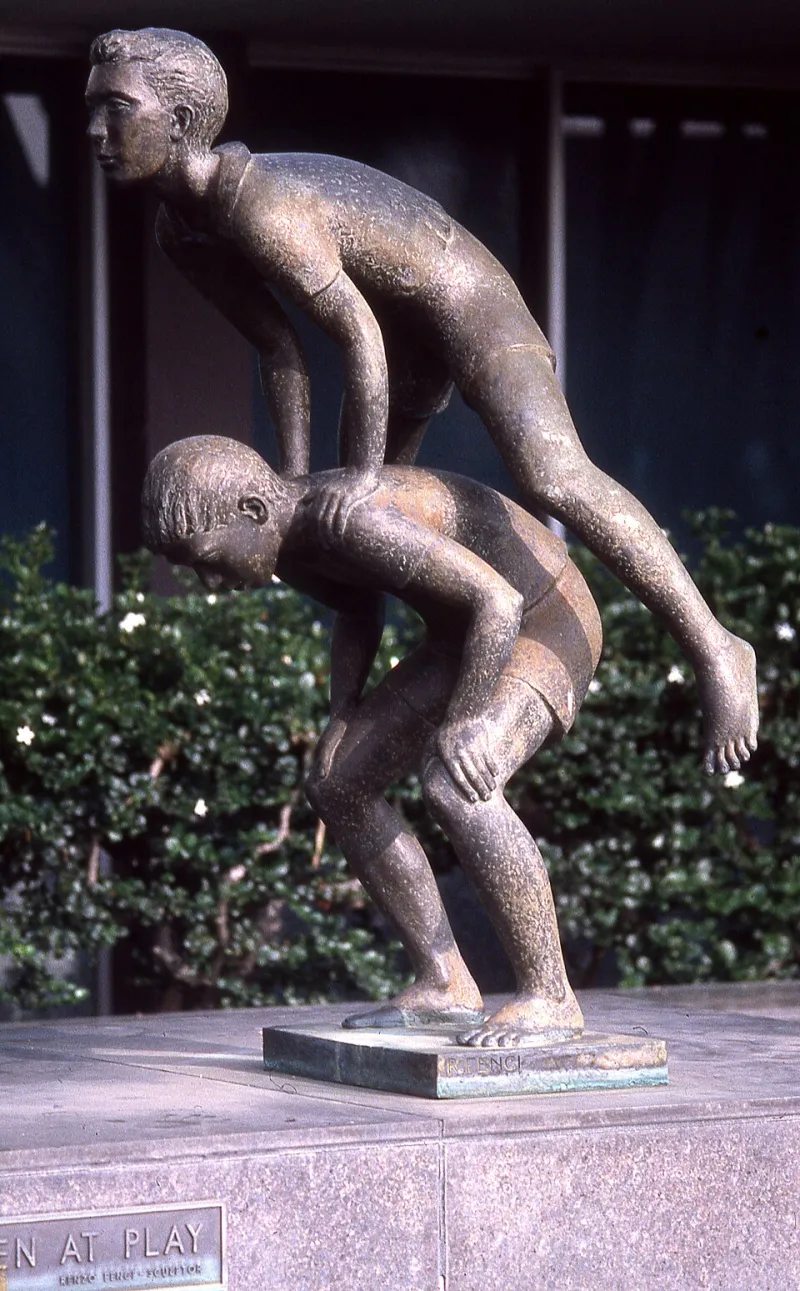
Photo: Renzo Fenci (1914-1999), Public domain, via Wikimedia Commons
There is a particular sound a British playground makes when a cartoon has clearly been watched by everyone at once. It is not quite a roar. It is more of a heated committee meeting conducted at running speed, with one child insisting they are the robot, another claiming they called it first, and a third waving a Pritt Stick like a sceptre because they have decided the game needs a title card.
We have all been there. The dinner bell rings, the tarmac steams gently, and within ninety seconds a perfectly good episode of something has been converted into a full-contact roleplay economy. No script. No rehearsal. Just a cast of eight-year-olds and an unwritten constitution that everyone somehow knows and nobody can explain.
The First Law: He Who Taped It, Casts It
Let us begin with the foundational rule, the one that predates all others: whoever owned the video got first pick. Not whoever liked the programme most. Not whoever could do the best voice. The owner. The child with the scuffed VHS on the shelf, the one whose dad had worked out how to set the timer, held the casting vote and usually the best role.
It was a brutal but elegant system. Ownership was proof of commitment. If you had taped it, you had earned the right to be the cool one, the villain, or the robot with the good laser noise. Everyone else queued up for sidekick duty and pretended to be pleased about it. The 2026 equivalent is messier: shared tablets, family logins, episodes watched on the bus. The casting row has simply moved to who saw it first and who can prove it without sounding insufferable.
A Field Guide to the Archetypes
Every schoolyard animation game produced the same cast of characters, regardless of the cartoon. Here is the taxonomy, as remembered by anyone who ever stood in a line waiting to be picked.
The Self-Appointed Robot
There was always one. Often a child with a very clear vision of how a robot should walk, which was stiff-legged and slightly sideways, like a wardrobe being moved. They had a catchphrase ready. They had a laser noise that was frankly too loud for the playground. They did not care about plot. They cared about presence. And to be fair, they usually got it.
The Sidekick With a Catchphrase
Every cast needed a loyal sidekick, and every sidekick needed a phrase. It did not have to make sense. It just had to be repeatable. The best catchphrases spread through a year group like nits. By Friday, the entire class was saying it, and by the following Tuesday it had been banned by a teacher who had heard it one time too many.
The Kid Who Insists on Accuracy
This child had notes. The robot did not walk like that. The sidekick did not say that. The plot was being ignored. They were usually right, and usually ignored, and usually ended up as the narrator, which was the playground equivalent of being sent to the quiet table.
The Narrator
A much-underrated role. The narrator stood at the edge of the action, arms folded, explaining what was happening to anybody within earshot. They were the Greek chorus of the netball courts. If they were good, they elevated the whole production. If they were bad, they just shouted the word “meanwhile” a lot.
The Reluctant Tree
Somebody had to be the tree, the lamppost, or the bit of scenery that the villain leaned on. It was not a glamorous job, but it was a job, and it came with the right to stand very still and look superior about it.
Props: Cardboard, Clag and the Sacred Biro
The playground had no budget and therefore no limits. A cardboard box became a robot head. A jumper tied round the shoulders became a cape. A biro with the lid chewed off became a laser sword. Somebody’s mum’s tea towel was a turban, a bandage, or a mysterious artefact, depending on the episode being recreated that week.
The great unspoken rule of props was that anything could be anything, but you had to commit. A wobbly cardboard laser was fine. A wobbly cardboard laser held by a child who kept breaking character to laugh was not. The playground was forgiving of bad props and unforgiving of bad faith.
The Catchphrase Economy
Catchphrases were currency. A good one could buy you a whole lunchtime of prestige. A bad one could follow you to secondary school. The trick was to invent something that sounded like it came from the programme without actually being from the programme, so that you could claim credit for it while still seeming official.
This was the playground’s own little writers’ room. Nobody had a script, but everybody had a line. Some of those lines lasted longer than the cartoon that inspired them. Ask anyone who was ever in a schoolyard and they can still quote a catchphrase from a show they cannot quite name.
What Streaming-Era Playgrounds Might Borrow
In 2026, the cartoon landscape looks different. Episodes arrive in drops. Kids watch on tablets with the volume turned up too high. The VHS owner has been replaced by the child with the family password, which is a less romantic but equally powerful form of leverage.
Still, the playground will always need a villain, a sidekick, and someone willing to be the robot. Streaming-era toons might borrow a few things from the old system: the idea that casting is a negotiation, not an audition; the understanding that a cardboard prop is a commitment device; and the simple joy of inventing a catchphrase that nobody can trace back to a screen.
The Rule That Actually Mattered
Looking back, the unwritten rules were never really about who got which role. They were about the fact that the game only worked if everyone agreed to play it properly. The kid who insisted on being the robot every single day was a menace, but the kid who refused to be the sidekick at all was worse. The playground needed both leads and supporting artists.
And so it continues, one generation after another, in playgrounds up and down the country. The cartoon changes. The tarmac stays the same. And somewhere, right now, a child is standing with their arms folded, waiting for their turn, quietly rehearsing a laser noise that will never be quite loud enough. Good luck to them.