Off-Model and Proud: A Loving Inventory of the Dodgy Cartoon Tat in Our Bedrooms
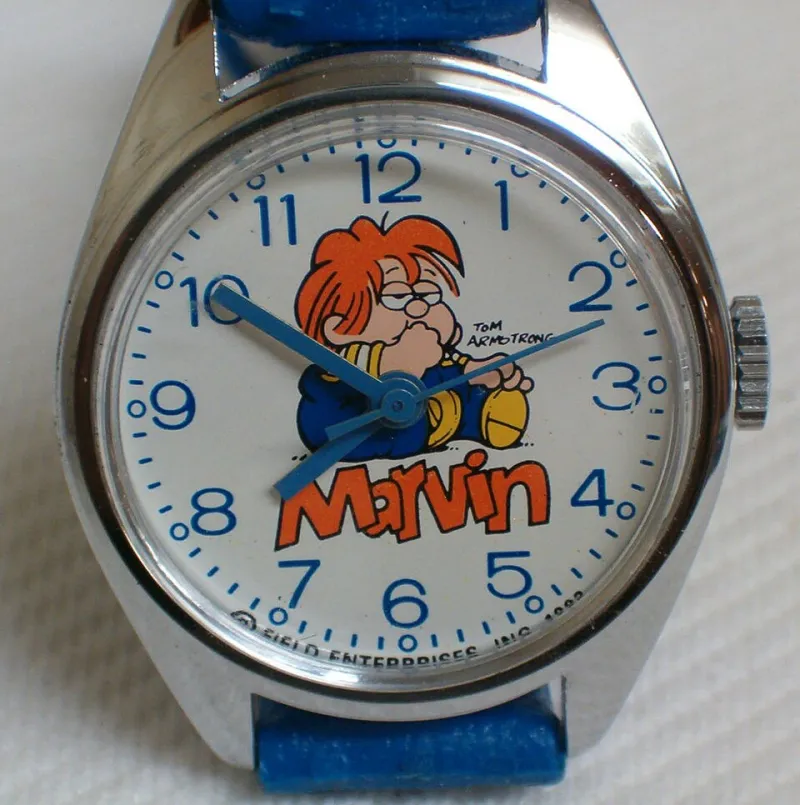
Photo: Joe Haupt from USA, CC BY-SA 2.0, via Wikimedia Commons
Somewhere in Britain, in a box in a loft, there is a mug with a cartoon character on it whose pupils are pointing in two different directions. It is not valuable. It has never been valuable. It was won at a fete, or bought for 50p from a stall in Skegness, or dug out of a cereal box in 1994, and it is — in a way that no sealed, graded, mint-condition collectible can ever be — an honest document.
In Praise of the Nearly Right
There is a school of thought that says cartoon merchandise should be accurate. A faithful reproduction, officially licensed, colour-matched to the animation cels. Fair enough. But that school of thought has never met a bendy figure of Danger Mouse whose nose has slowly migrated sideways over three decades of being left on a radiator.
The tat shelf is not a museum. It is a diary. Every wonky item on it marks an afternoon when somebody wanted a piece of their favourite cartoon badly enough to accept a badly stamped, slightly sweaty approximation of it. That is fandom with the polish scraped off, and it deserves a plinth.
Here, then, is the inventory — the taxonomy of the beautiful, the cheap and the marginally illegal.
The Annual With the Wrong Coloured Eyes
Nothing says “rush job” like a hardback annual with a September deadline and a cover painted by a freelancer who had never seen the programme and was going off a faxed description.
You know the type. The Turtles on the front — Teenage Mutant Hero Turtles, thank you, this was Britain and we were delicate — where one of them has been given the wrong bandana, or four fingers, or a second weapon he has never owned in any episode ever broadcast. Inside, page 47 is a crossword. Page 48 is a story in which the characters address each other by slightly incorrect names.
It is a treasure. It is a snapshot of an industry moving faster than quality control could follow, and every child who ever received one knew, deep down, that it was a bit wrong and loved it anyway.
Cereal Box Economics
The purest form of cartoon tat: free, functional, and almost always a disappointment within forty-eight hours.
The free gift in the box was a shrine to optimistic packaging. The photograph on the back would show a fully poseable action figure in a dramatic stance. What emerged from the bag was a two-part plastic shape with the emotional weight of a milk bottle top, in a colour best described as “out of the printer”.
And yet we campaigned for it. We made our parents buy the cereal with the cartoon on it rather than the cereal anybody actually liked. We compared our free gifts in the playground like tiny, impoverished art critics. Somewhere there is a fully grown adult who still owns a rubbery cartoon caterpillar that came free with a box of something in 1991, and they are not throwing it out.
The Market Stall School of Art
The Sunday market stall operated on a different legal and artistic plane entirely. On offer: mugs, keyrings, pencil cases and loose badges, all bearing the unmistakable fingerprints of a copy of a copy.
This is where you found the off-model gems. A Superted with a cape the wrong shade of red and the expression of a man who has just remembered something important. A Count Duckula who has been rendered in a green-adjacent brown that appears nowhere in nature or in Cosgrove Hall’s paint cupboard. A Mr Blobby of uncertain provenance and profound menace.
The stall was never trying to trick anybody. It was supply and demand, with the demand being seven-year-olds and the supply being whatever the wholesaler had in the back of a van. These objects are now the closest thing we have to a folk art tradition of British cartoon affection.
Bendy Figures and Their Knees
A special mention for the bendy figure — that wire-cored, rubber-skinned wonder that could be posed in any position, provided that position was “slumped”.
Bendy figures lived hard. Knees wore through. Ankles cracked. The colour chipped off in flakes that went everywhere. A bendy figure of a well-known cartoon dog, kept warm on a windowsill, would gradually develop the silhouette of an animal that had given up.
No collector wants a bent bendy figure. Which is precisely why a bent bendy figure is worth keeping: it has been played with, which is the entire job description.
Pristine Is Not the Same as Loved
There is a whole industry now devoted to keeping cartoon merchandise in plastic, unopened, upright, away from daylight and small hands. It has its place. But a shelf of sealed boxes is a shelf of promises about what fandom might have looked like.
The tat shelf is what it actually looked like. Sticky fingerprints on a laminate character tray. A mug whose orange is nobody’s idea of orange. An annual so misprinted that the villain is briefly the same colour as the wallpaper. A frisbee that came free with a comic and has never once flown.
In 2026, when you can order a perfectly replicated, officially sanctioned, colour-accurate version of anything within twenty-four hours, there is something quietly heroic about the badly stamped, hand-me-down, slightly wrong stuff we held on to instead.
So go up into the loft. Find the mug with the wonky eyes. Give it a wash, put a brew in it, and raise it — carefully, the handle’s cracked — to the glorious, chaotic, off-model tat that got us all here.