Felt Tips and Fast Fingers: Britain’s Pause-and-Draw Ritual Deserves a Comeback
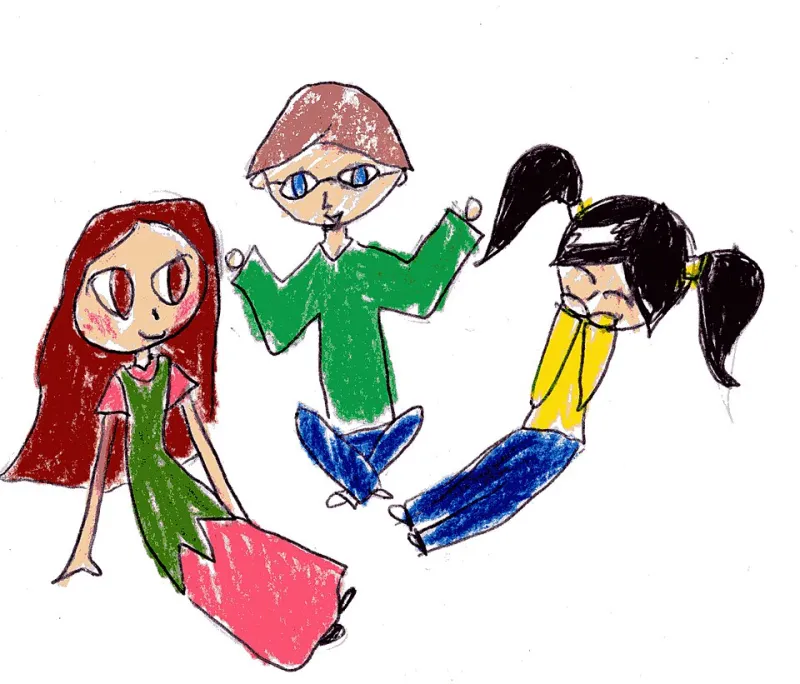
Photo: MissLunaRose12, CC BY-SA 4.0, via Wikimedia Commons
There was a particular moment, somewhere between the second bowl of cereal and the closing credits, when British children’s telly stopped being a spectator sport and handed you a pen.
You’d be sitting cross-legged on the carpet, three feet from a wood-veneered set with a doily on top and a rubber plant sulking behind it, when a presenter would look straight down the barrel and ask: “Have you got your pencils ready?” Reader, we did not have our pencils ready. We had a biro with a chewed end, half a Pritt Stick and the lid of a cereal box we’d been told to keep “for crafts”. And still, the invitation was impossible to turn down.
The Invitation Nobody Declined
This was the quiet genius of the draw-along segment: it assumed you were participating. Not “here’s a picture, isn’t it nice” but “right, you do one too.” Tony Hart’s corner of the schedules ran on this contract for decades — through Vision On, Take Hart and Hartbeat — and the deal was always the same. He would build something out of a felt tip and a bit of encouragement, a little plasticine chum called Morph would get up to something unhelpful in the corner, and you would be expected to keep up.
Then came Art Attack, where Neil Buchanan turned the studio floor into a one-man logistics crisis and the camera pulled back to reveal a picture so enormous it needed its own postcode. You were never going to make that one. But you had a go at the small version, and that was the point. CITV did the same thing with a fraction of the budget: a presenter, a flipchart, a running joke about the mascot, and a nation of children smearing marker pen on the inside of their wrists.
Pause, Rewind, Smudge
The technology of the era turned drawing into an athletic pursuit. If you missed the crucial bit — the bit where a blob became an ear — you had to lunge for the remote, which was usually under a cushion, and hit pause.
What you got was not a crisp freeze frame. You got a picture with a wobbling band halfway down it, a faint green tear across the presenter’s face, and that little word PAUSE sitting in the corner like a smug referee. Hit play too quickly and you’d overshoot; rewind and you’d lose your place entirely, then spend four minutes hunting for the right bit while your little brother shouted “you’ve gone past it” with the confidence of a man who had never operated anything in his life.
And yet — somehow — this made the drawing better. Because a smudged, half-remembered version of the telly picture became your picture. It had mistakes in it that no one else in the country had made. Nobody was going to tell you the ears were wrong, because nobody was watching.
Getting It Wrong Was the Curriculum
Here is the thing that gets lost whenever we mourn old telly: the output was often rubbish, and that was the whole pleasure. Your Bananaman looked like a traffic warden. Your Morph had the general silhouette of a potato in a hat. Your attempt at a cartoon dog ended up closer to a bin bag full of regret.
But you stuck it on the fridge anyway, with a magnet shaped like a strawberry, and there it stayed until the corners curled.
Drawing along with a programme taught a few things that no after-school club ever managed. It taught that making something is more fun than making something well. It taught patience, briefly, before the segment ended. And it taught the profound truth that the gap between the picture in your head and the picture on the paper is where all the personality lives.
What the Streaming Era Gained
In 2026, the draw-along is thriving — it has simply moved house. There are YouTube channels with a million subscribers where a kindly person in a nice jumper walks you through a cartoon fox in real time, and there are apps that will lend you a stabilised brush so your linework doesn’t look like an electrocardiogram. You can pause whenever you like. You can slow it to half speed. You can rewind fifteen seconds without the tracking going funny and without your mum telling you to stop messing with the machine.
That is genuinely wonderful, and any adult who has discovered the meditative joy of a “draw with me” video at eleven at night knows it.
But something has slipped quietly out of the frame. Drawing along with the telly was simultaneous. Half a million children were making the same badly proportioned dinosaur at the same moment, on whatever paper was nearest, and then going into school the next day and comparing lumps. It was a national art class conducted in pyjamas. Streaming gave us endless choice and infinite patience, and quietly took away the shared afternoon.
Bring Back the Wobble
So here is a modest proposal for the winter of 2026. One evening this week, put a cartoon on — any cartoon, ideally one with a character who would be improved by your interpretation — and pause it at a good bit. Find a pen that works. Use the back of an envelope, because envelopes are the traditional medium of the British amateur.
Draw it badly. Draw it with total commitment. Then stick it on the fridge and leave it there until the corners curl.
The presenters of your childhood were not asking you to be good at art. They were asking you to sit still, have a go and make something slightly wrong. It remains the finest instruction British telly ever gave us, and it costs nothing but a felt tip and the willingness to be a bit rubbish in public.