The Villain Purr, the Squeaky Sidekick and the Narrator You Know: Britain's Cartoon Voice Repertory
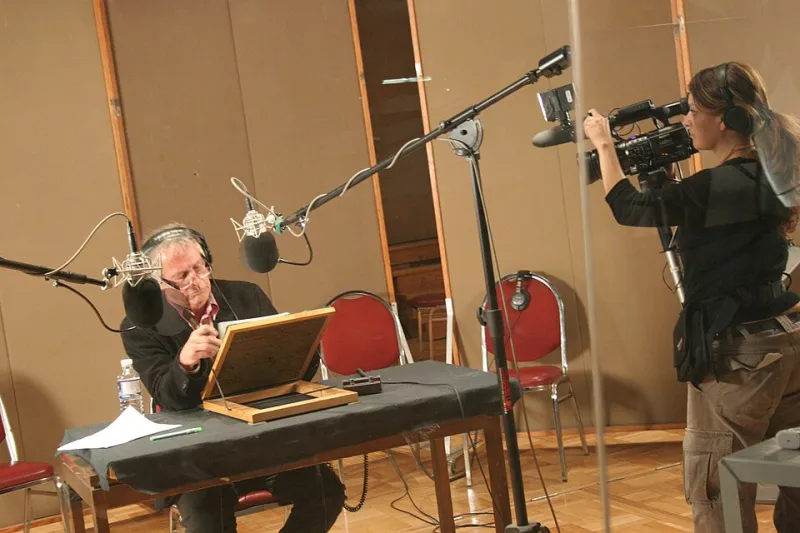
Photo: Kat Baulu, CC BY 2.0, via Wikimedia Commons
British cartoons have a secret weapon, and it is not the writing, the cardboard sets or the fact that every villain sounds like they have a mortgage. It is the voices. The same voices. Over and over again. A narrator who sounds like a benign uncle. A squeaky sidekick who has clearly had three espressos. A villain with a purr that could butter toast. This is the repertory company of British animation: jobbing actors who pop up across decades, often in the same afternoon, and make the whole thing feel like a family business.
Here at Cartoon Me, we love a celebrity cameo as much as anyone, but there is something deeply satisfying about recognising a voice before you recognise the character. It is the animated equivalent of seeing the same actor play a doctor, a detective and a disappointed dad in three different ITV dramas. Consistency is not lazy. It is character.
The Repertory Company You Never See on Stage
America has celebrity voice casting; Britain has 'hang on, isn't that the same bloke who did the thing with the mole?' David Jason was Danger Mouse and Count Duckula. Brian Trueman narrated Danger Mouse and voiced Nanny in Count Duckula. Peter Sallis was Wallace. Kenneth Williams did every voice in Willo the Wisp, presumably because the budget had run out and everyone else had gone to lunch. Michael Hordern narrated The Wind in the Willows and Paddington. Richard Briers was Roobarb. John Sparkes narrates Peppa Pig and Fireman Sam. Keith Wickham and Rob Rackstraw have been in more childhoods than the tooth fairy.
The same six voices is a joke, but it is a fond one. It means a British cartoon has a texture: regional, theatrical, a bit silly. The voices are not interchangeable. They are a stock company, and the stock company is the point. You can hear the joy of actors who know exactly how to land a line for a five-year-old and a tired parent at the same time.
The Narrator: The Voice That Tucks You In
The narrator is the most British invention in animation. Not a hero, not a villain, just a man who has seen some things and is going to tell you about them in a reassuring baritone. Brian Trueman in Danger Mouse. Michael Hordern in The Wind in the Willows. Alexander Armstrong in Hey Duggee. John Sparkes in Peppa Pig, where every 'oink' sounds like a mild complaint about the weather. The narrator is the adult in the room, except the room is a cardboard castle and the adult is wearing a cardigan.
A good narrator can make a ridiculous premise feel like a bedtime story. A great narrator can make a ridiculous premise feel like a bedtime story that is also a warning about the dangers of ambition. British animation has always understood that the narrator is not there to explain the plot. The narrator is there to be your friend while the plot happens.
The Squeaky Sidekick and the Villain Purr
Then there is the squeaky sidekick: Penfold, Nanny, Sweep, or any small creature whose job is to panic so the hero can look calm. And the villain purr: that plummy, slightly bored, deeply theatrical voice that says 'I am evil, but I am also available for voiceover work on Thursday.' Kenneth Williams could do all of them at once in Willo the Wisp. David Jason could switch from Danger Mouse's clipped heroics to Count Duckula's vegetarian vampire lisp without breaking a sweat. This is repertory acting: the same actor, a different hat, a completely different childhood memory.
The villain purr is a particular British treasure. It is the sound of a villain who is not really going to win, but is going to enjoy the attempt. It is panto, radio drama and a slightly threatening uncle all rolled into one. And the squeaky sidekick is its perfect counterpoint: the voice that says 'oh no' so the narrator can say 'oh yes'.
Spot the Voice: A Mini-Game
Here are five clues. Answers at the bottom. No peeking, unless you are the sort of person who reads the last page first, in which case: we understand.
- This actor gave voice to an egg-shaped vampire duck and a mouse with an eyepatch.
- This actor narrated Danger Mouse and later voiced Nanny in Count Duckula.
- This actor was a cheese-loving inventor and a ratty friend in The Wind in the Willows.
- This actor narrates Peppa Pig and Fireman Sam, and can make a fire engine sound faintly disappointed.
- This actor is a modern repertory king, popping up in Thomas & Friends, Bob the Builder and Fireman Sam.
Answers: 1 David Jason. 2 Brian Trueman. 3 Peter Sallis. 4 John Sparkes. 5 Keith Wickham.
Who's Still Working in 2026?
Plenty of them. The repertory has not retired; it has diversified. Keith Wickham, Rob Rackstraw, Emma Tate, David Holt, Jo Wyatt, Teresa Gallagher and Morwenna Banks are still popping up in UK animation, audiobooks, radio drama and games. John Sparkes remains a narrator you would trust with a small child and a fire engine. Alexander Armstrong continues to narrate animated animals with the gravity of a man reading the news. The voices are still there. They have just moved from the telly to the headphones, the console and the in-car entertainment system.
That is the quiet magic of the repertory player. They do not need a red carpet. They need a microphone, a script and a character who is either very small, very evil or very tired. In 2026, the UK animation industry is still making cartoons, and the same voices are still holding the whole thing together like a familiar pair of slippers.
Why the Repertory Matters
A starry import is fine. A British cartoon with the same six voices feels like a family reunion in a village hall. You recognise the narrator. You recognise the sidekick. You recognise the villain, and you realise he was also the postman in the other show. That consistency is not lazy; it is character. It gives UK cartoons a flavour you cannot fake with a celebrity cameo and a trailer. It is the sound of a small island making a lot of noise with a handful of actors and a microphone.
So next time you watch a British cartoon, play the game. Spot the voice. Name the actor. Then imagine them in a studio, doing three characters in an afternoon and complaining about the parking. That is the repertory. That is the character. And we would not have it any other way.